Skip Hire Cranford Health & Safety Policy
Policy statement: Skip Hire Cranford is committed to protecting the health, safety and welfare of staff, visitors and the public in all aspects of its skip hire and rubbish removal operations. This policy sets out our approach to managing risks associated with skip hire services, waste collection and general rubbish company activities. The aim is to prevent injury, ill health and damage to property while promoting safe working practices across all service areas.Responsibilities and commitment
All employees, contractors and management have a duty to work safely. The management will provide clear leadership by allocating resources, ensuring competent supervision and maintaining systems that support safe operations. Employees must follow safe systems of work, report hazards and take reasonable care for their own health and safety. Skip hire providers and operatives are expected to cooperate fully with risk control measures and training initiatives to ensure consistent compliance across the organisation. Risk assessment and control: risk assessments are carried out for all tasks associated with skip delivery, collection, loading and transport. Assessments are reviewed regularly and whenever there is significant change to operations. Key control measures include:
- Task-specific assessments for manual handling, vehicle operations and site access;
- Safe systems for loading skips and securing loads for transport;
- PPE requirements such as hi-vis, gloves, boots and eye protection;
- Exclusion of hazardous materials where specialist handling is required;
- Traffic management plans for works on or near public highways.
Operational safety and vehicle management
Vehicles and mobile plant are maintained to manufacturer and legal standards. Drivers and operatives are required to be competent and licenced where relevant. Routine vehicle checks, load checks and securement procedures are mandatory before departure. When accessing client sites for rubbish collection or skip placement, operatives will assess site-specific hazards, including overhead obstructions, ground stability and public access, and will implement controls to prevent incidents involving the vehicle or skip.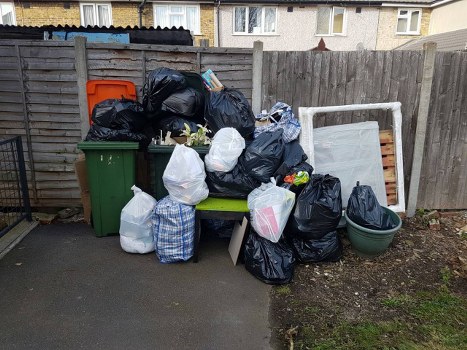
Manual handling, PPE and waste segregation
Manual handling controls are emphasised throughout our operations to reduce musculoskeletal injuries. Mechanical aids are used where practicable and team lifts are planned for heavy or awkward loads. PPE is provided and its use enforced; inspections ensure effectiveness. Waste segregation is practiced to prevent contamination and minimise hazardous exposures — separate streams for general rubbish, recyclable materials and hazardous wastes are maintained, and staff are trained to recognise prohibited items that should not be placed in skips.Training and competence are central to safety. All staff undergo induction training on health and safety policies, operational procedures and emergency response. Refresher training is scheduled regularly and whenever new equipment, processes or regulations affect the workplace. Supervision and on-the-job coaching reinforce safe behaviours and operational standards for our rubbish removal and skip hire services.
Emergency procedures and incident reporting
Emergency arrangements are in place for incidents such as vehicle collisions, spillage, fire or medical emergencies. First aid provision and access to competent first aiders are maintained. Incidents, near misses and unsafe conditions must be reported immediately so that corrective actions can be implemented. We operate a no-blame reporting culture to encourage early reporting and continuous improvement of safety controls. Environmental and hazardous waste management Our rubbish company responsibilities extend to the environment. Waste that is classified as hazardous is handled only by trained personnel with appropriate permits and documentation, and is transferred to authorised treatment facilities in accordance with applicable waste management practices. Measures are in place to prevent contamination during skip placement, transfer and transport, and to minimise dust, noise and spill risks associated with waste collection activities.
 Monitoring, auditing and continual improvement: safety performance is monitored through routine inspections, audits and performance reviews. Key performance indicators include incident rates, training completion, vehicle maintenance compliance and audit findings. Corrective actions are tracked and closed out to reduce recurrence. Management review of safety metrics informs policy updates and resource allocation to maintain high standards across our skip hire and rubbish removal services.
Worker consultation and communication: employees are consulted on health and safety matters through toolbox talks, team briefings and a safety committee. Communication of policy changes, risk notices and operational instructions is maintained to ensure everyone understands current expectations. Encouraging active participation and feedback from staff helps identify practical improvements in daily rubbish collection and skip handling tasks.
Policy review and scope: this Health and Safety Policy applies to all aspects of skip hire services, waste collection and related activities carried out by Skip Hire Cranford. The policy is reviewed at least annually or sooner if operational changes, legislative updates or incident trends indicate the need. Revisions are communicated to all staff and relevant stakeholders to ensure ongoing relevance and effectiveness.
By working together to manage hazards, maintain equipment, follow safe systems and support training, we aim to deliver reliable, safe and responsible skip hire, rubbish removal and waste services. It is the responsibility of every individual associated with our operations to uphold this policy and contribute to a safe working environment.